03 · July 2026
Beyond Talc: The Modern Powders That Take Its Place
For most of a century, body powder meant one material. When many set it aside, a quieter question followed.
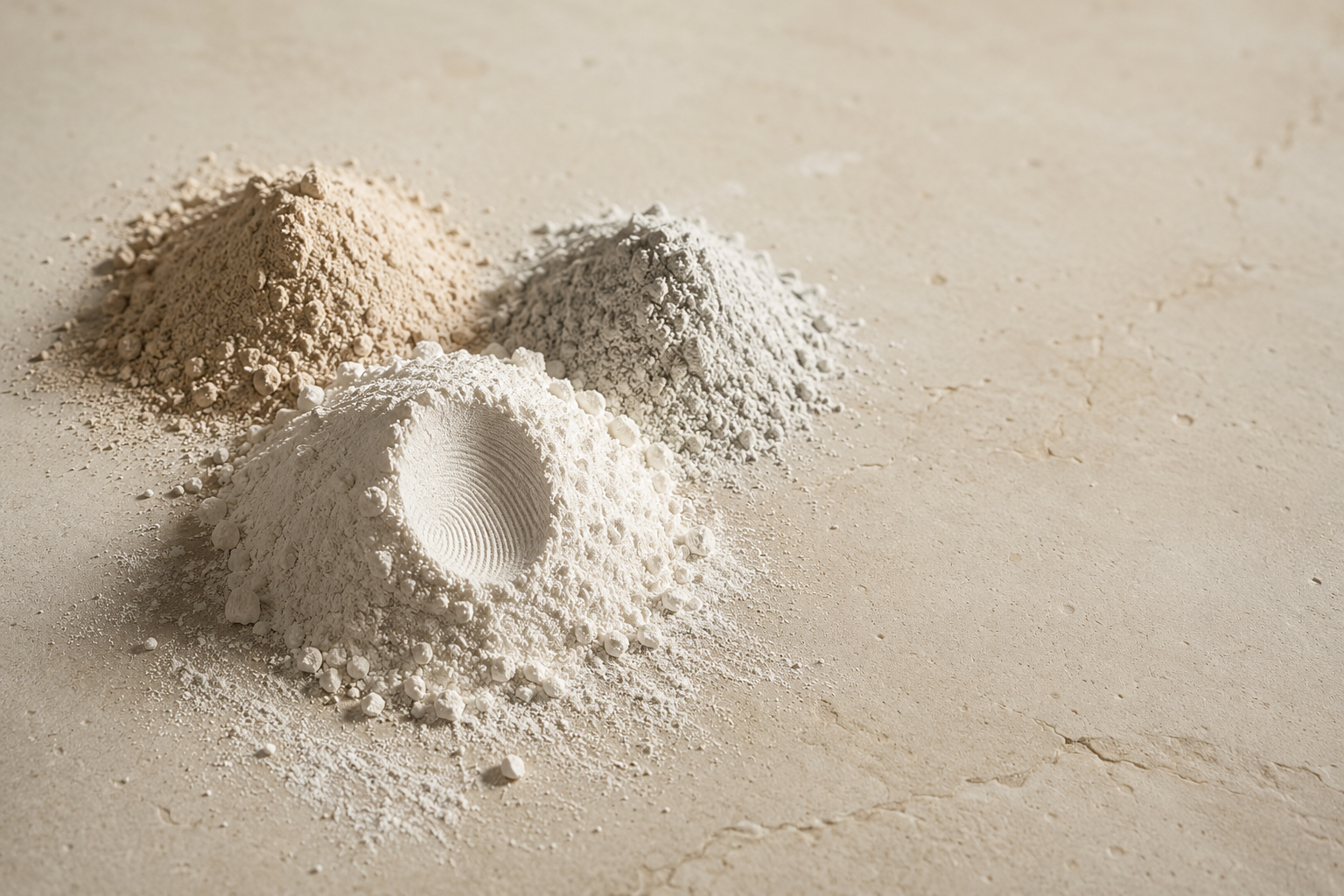
For most of a century, body powder meant one material: a soft mineral milled to an impossibly fine dust. When many people began setting it aside, a quieter question followed. If not that, then what?
The answer is a small pantry of materials — most of them older than the thing they replace, each with its own way of meeting skin.
First, what a powder is for
Before the ingredients, the task. A body powder is asked to do two modest things at once: take up a little moisture, and let skin move — against itself, against linen, against the day — without friction. Every choice in a modern formula serves those two ends. The better formulas are judged on a third: how they feel while doing it.
The starches
Most talc-free powders are built on plant starches — corn, tapioca, arrowroot, rice. They are among the oldest cosmetic materials we have, and they earn their place honestly. A starch granule is thirsty by nature; it takes up moisture readily, which is what keeps a powder feeling dry rather than damp against warm skin.
They differ in the hand. Rice starch is prized for a particularly fine, almost matte softness. Tapioca and arrowroot lean silkier, with a slip that feels closer to a second skin than to a dusting. What they share is lightness — a starch base tends to sit weightlessly, more veil than layer.
Kaolin, the clay
Where starches absorb, clay refines. Kaolin — a naturally occurring white clay, ground to a whisper — brings a soft-focus, matte quality and a gentle capacity to take up excess moisture and oil. In small proportion it lends a velvety, grounded finish; too much and a powder turns chalky. The craft is in the measure.
Why the base decides everything
A powder is a blend, and the blend is its personality. Particle size determines whether a formula reads as gossamer or as grit. The ratio of starch to clay decides whether the finish is silken or matte. Fineness of milling governs the way it catches the light and settles into skin. None of this is visible in an ingredient list; all of it is legible the moment powder meets the back of a hand.
The point of the alternative
Choosing a talc-free powder is not a defensive act. It is a preference for a particular kind of feel — the weightless, dry-touch softness that a well-built starch-and-clay base delivers. Underbloom is made in exactly this spirit: talc-free by design, composed for the sensation of a soft veil that leaves skin comfortable and cared-for, its fragrance kept so low it reads as skin rather than scent.
The materials that replaced talc were never a compromise. Handled with care, they are the better part of the story.
— Robin
Follow the Work